The stage play for World Trigger that was scheduled to open on the 7th in the Shinagawa Prince Hotel at 5:30 pm has been cancelled.
The announcement was reported on the official site, “Due to the illness of staff that are involved in the 5:30 pm performance, it will be cancelled. We sincerely apologize to everyone who was looking forward to attending the play with this last-minute announcement and ask for your understanding”.
Sales for the play will be held for ticket holders until 8:00 p.m. Information regarding refunds for tickets will be announced at a later date.
The same play is planned to be performed until the 14th in Tokyo and Kyoto from the 19th to the 21st.
Even before Covid, the main performers got the flu or other illnesses and the plays were suddenly cancelled. That goes for plays and concerts. Of course there weren’t as many cases as the pandemic though. Even though they cast the role with an understudy in case of situations like this, testing for Covid and other things happen that cause these events to be cancelled or not able to resume.
You never know what will occur right before the curtain raises. I think it would best to buy tickets with that in mind.
There’s been a lot of news like this lately.
Because of the Corona pandemic, of course the cancellation of the event is inevitable and its all the staff can do when someone gets sick. However, I feel bad for those who travel a long way for “this day”. Especially if they only get a refund. Of course, I do believe they are prepared for things like this but it just seems not to be worth it.
Once again another play being cancelled on the day of the play lol.
How about we stop going to see these half-assed plays. Maybe then management will start to have a sense of crisis and cancel the show in advance or set up some kind of guarantee system in case of cancellation for the customers.
To be frank, this industry underestimates the amount of people who see these performances.
It’s probably because the where they do rehearsal and where the performance is being held are in the same location, but the play for Spirited Away at the Gionza Theater is still going to open.
Kind of a shame. I like World Trigger and these kind of stage plays would be interesting to see one day. Hopefully they have their refunds by now. Considering what I saw in the comments, these cancellations have been quite frequent. Nonetheless, there’s nothing that can be done. The health of people shouldn’t be trumped by entertainment. On the other hand, I can see why someone would be upset by this if they planned out a whole trip centering around events like this.
V (Plain form) + というより(は) N + というより(は) い-Adj + というより(は) な-Adj + というより(は)
This is used to express something in another way. Like to make things more clearer. There is a casual way to use this as well with friends. And that is ていうか.
There is also a idiom というよりはむしろ is often used with this grammar. It means “rather than… instead…”.
Ex: 彼はゲームで日本語を勉強するというより練習するのです。
(He practices his Japanese rather than studying it with video games.)
Ex: 僕はマスターというよりはオールラウンダーです。
(I’m an all-rounder rather than a master.)
Ex: 彼女はかわいいっていうか美人だと思います。
(She’s more of beauty than a cutie.)
Ex: この本は無理というよりは難しいです。
(This book is hard rather than impossible.)
[ところで]
by the way
This is a conjunction that allows you to change the subject. A similar word to this is ちなみに.
Ex: ところで、昼ご飯一緒にどう?
(By the way, how about we go get lunch?)
Ex: ところで、明日空いてるの?本屋に行かない?
(By the way, are you free tomorrow? Do you wanna go to the bookstore?)
分=part, minute of time, segment, share, degree, one’s lot, duty, understand, know
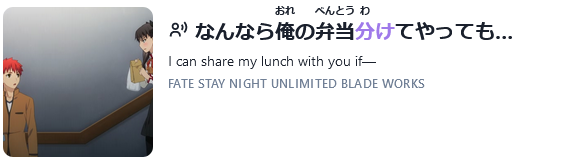
From the kanji itself, you can get a feel for the meaning of this verb. Another reading of this kanji is 分(ぶん)which means part, portion or share. With this verb you can use it to say you’ll share something with someone else. Like RIn (poorly) offering to share her lunch with Shiro.
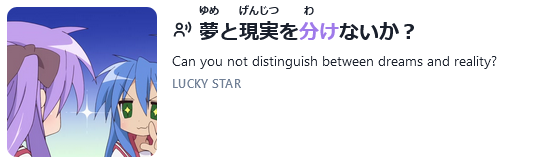
Or you can use it to mean to distinguish something from another thing. Like how Kagami is questioning if Konata can separate reality from a dream.
This verb can be used by itself. However there are other ways to use it such as:
切り分け = to divide(分け) something by cutting(切り) it.
Like a ring being put in a cut-up pie from Is the Order a Rabbit.
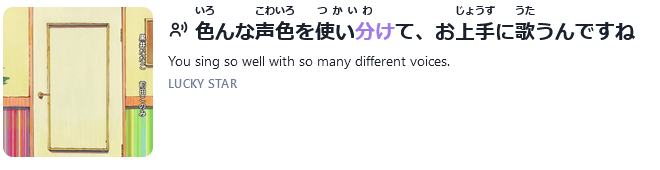
使い分け = to use(使い) something for different (分け)things.
Like a voice actor using their skills at karaoke in Lucky Star.
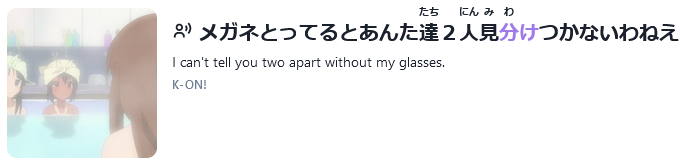
見分け=To make a distinction(分け) by sight (見).
Like Sawa-chan can’t tell Mio and Azusa apart without her glasses from K-ON!.
[Trying something new] A:This restaurant has delicious food. B:It looks like it. Do you go here often? A:I eat here a couple of times out of the week. Oh, here’s the menu. B:What? A:What’s up? B:What’s this? U… na… jyu… where have I seen this before? A: Oh, unaju. Probably Genta from Detective Conan. It’s Genta’s favorite food. B: Oh, that’s right. Looks delicious. A:This restaurant is famous for it. B:Then, I’ll have this. A: Me too. By the way, it’s on me. B: Wow, thanks.
タイトルを見る/WHAT’S IN A TITLE
恋の打ち上げ花
恋(こい)の This may be familiar to you. You probably have seen this kanji in 恋人(こいびと) or 恋愛(れんあい)for those who have listened to Renai Circulation for the umpteenth time. This kanji refers to love in the romantic sense. So I’ll go with “Love” here. The の connects 恋 to the next word. It’ll most likely be “of” or be given a possessiveness. Let’s take a look at the next word.
打ち上げ(うちあげ) 打ち comes from the verb 打つ and 上げ comes from the verb 上げる. There is one definition I found that fits for 打つ in this context and that is “to move” and 上げる means “to rise”. So to move upwards?
The word 打ち上げ also reminds me of a certain movie by Shaft.
『打ち上げ花火、下から見るか? 横から見るか?』or Fireworks, Should We See It from the Side or the Bottom? From this you can see this word is used to say “launch fireworks” or just “fireworks”. By looking at 打ち上げ that makes sense.
花(はな) This basic kanji here means flower. However, as you could see from that movie title it is usually paired with the kanji 火 to make fireworks. Think of a firework and how it sprouts out like a flower. I guess that is how the word 花(flower) 火(fire) came to be.
Without that kanji it just means something like “Launching flowers”. Perhaps they were going with something more poetic. So maybe I’ll go with that spin as well and go with a more “literal” translation.
Launching Flowers of Love
That works. This title comes from the show Boruto (episode 260). I know I’ve talked about Boruto in the past but I found this episode interesting (plus I want to rant about the absolute state of Boruto on Crunchyroll).
This episode was a good one to have during Summer. Mainly because of the fireworks.
So this episode was like Tamaya (玉屋・たまや) and Kagiya (鍵屋・かぎや) with a bit of Romeo and Juliet mixed in. Interesting. Tamaya and Kagiya were rival firework makers in the Edo period. People used to cheer for one or the other when they held a competition for who had the best fireworks. That’s why you sometimes hear someone say 「たまやー」(Tamaya) or「かぎやー」(Kagiya) during fireworks in anime.
And now on to the rant.
I know that I’ve talked about this anime before but I wanted to talk about the current state of Boruto on Crunchyroll. It’s better to say the absolute state of Boruto on Crunchyroll.
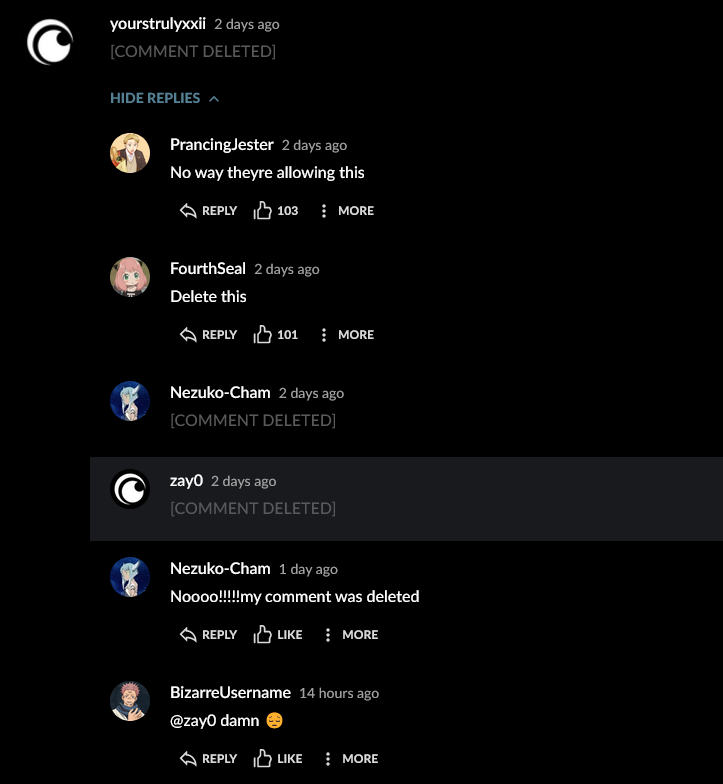
Crunchyroll has been going on a deleting/spoiler marking spree on Boruto comments for months now. It seems to have all started with episode 246. Even my comment got deleted XD. Good thing I put my comments on MAL. Here is what I said:
“Holy cheeseballs. I wasn’t expecting Boruto’s Karma showing up. Darn I forgot Iwabe and Sarada can use medical ninjutsu. Thought she wasn’t good at it. Still think they could’ve used Hibiichigo’s sewing technique here. That could’ve been helpful. Did Tenma really just die though? What the heck. Isn’t he supposed to be strong. Then again he had a flashback so that usually means a death flag.”
Funny thing is I think they marked it as a spoiler at first. However looking back now, it just says [COMMENT DELETED].
I can understand deleting the typical comments that state how crappy the show is or they spoil something from the manga. However, this isn’t the case here. Lately I have been putting my comments in spoiler tags (because 90% of the time the mods will end up doing it anyway). I found if I don’t and the mods do it, you can’t take the spoiler tag off. The constant “why are so many comments getting deleted” or “why are there so many spoilers” comments shows what kind of a sad state Boruto is in right now.
There are three things I have come up with:
The mods have the power to mark comments as spoilers or delete them (according to a forum I found here).
Hardcore Boruto fans flagging comments as a spoiler or reporting the comment.
The mods somehow put bots on this show’s comment section alone.
Heck, even in this episode, Steelers92 said something about Kakashi drinking tea with his mask on and it got deleted (along with the replies). Then several other people commented about the same thing and they are still there.
Hopefully with the current arc (the Himawari Kawaki Ninja Academy Arc) there will be less of this. Considering they deleted a comment saying “finally some Himawari” on episode 261 that’s not going to happen. I don’t think the person meant anything nefarious by this comment but two people replied to it. Tried to explain why it was deleted in a comment and well… it got deleted.
I went to a charcoal cutter’s house. Maybe he can tell me about this move called Cut. No dice. He’s worried about his apprentice in Ilex Forest. Guess I’ll help him out. When I was heading for the forest I was stopped by Keiji. He heard about the incident and was wondering who took down Team Rocket. He didn’t believe that I did it and challenged me to a Pokemon.
First Pokemon: Gastly. Kochou’s Confusion is super-effective on it (Is it a poison type?) and took it down. His Zubat was also super-effective to Confusion. Sent out Static to take it down with a Thundershock. So his Totodile has evolved into a Croconaw. Sent out Toriyama to hit it with a Sand-attack. Poisoned it with Peter’s Poison Sting and slowed it down with Scary Face. Hanabi is the only one that I can count on to take him down. We were lucky Croconaw kept missing but it almost killed her with Water Gun. We finished the fight with a Tackle.
Weak this weak that. How does his Pokemon put up with him? Looks like he’s got a bone to pick with Team Rocket. Wonder what that’s about? Meh. Anyway I gotta go look for that apprentice. But first: the Pokemon Center.
In conclusion, I hope that this series is helpful with your journey to learning Japanese and/or taking an interest in the country’s culture. Until then… また来週!
Used to explain a concept or a definition. It’s often used with ということです or のことです. When you are using this grammar in a conversation、 you can just say とは instead of というのは.
Ex: 「梅雨入り」というのは、梅雨の季節になることです。
(“Tsuyuri” means the beginning of the rainy season.)
Ex:「名探偵」とは有名な探偵のことです。
(A “great detective” is a detective that is famous.)
[というと]
speaking of, if it were the case that
Noun + というと/といえば/といったら
We know that という mean to say. It allows us to say a quote. The と here means if/when. This と is one of the few ways to make a hypothetical.
This grammar expresses when we are talking about something or if that is what we are talking about. You can use it to bring up a topic.
Ex: アメリカに不人気マンガという、「僕が答える君の謎解き」を思い浮かぶ。
(Speaking of unpopular manga in America, “I’ll Solve Your Mystery” comes to mind.)
Ex: アニメといえば、まだ「名探偵コナン」を見ていますか。
(Speaking of anime, are you still watching “Detective Conan”?)
The kanji is simple but let me get into types of verbs for a bit.
There are two types of verbs: transitive and intransitive verbs. Be careful with these because they can use the same kanji.
Transitive verbs are used for direct objects. They always use the particle を before them. It’s doing something to something else. Here’s an example:
ゲームを買いました。 I bought a game.
The direct object here is the game that was bought.
However, intransitive verbs are used for subjects only. These verbs don’t use the particle を. It can use other particles like に、と、が、and へ though.
These kind of verbs are usually done by the subject itself. Here’s an example.
ドアが開けました。 The door opened (by itself).
This verb here is an intransitive verb. Unlike the verb 売る to sell. This means to sell well like Koro-sensei telling his student that she could make a lot of money by selling a beetle.
Or it can mean that you are popular or in the case of the manga artist from Bunny Drop… not so much. You could also say she’s not selling those volumes that well.
A: Hey there, Emi-chan, sorry I’m late. B: Geez what took you so lo- Uh… who are you? A: Eh… really? It’s me, Takeshi. B: Eh?! Takeshi?! What did you do to your hair?! A: It’s been so hot lately, I cut it all off. B: You had such long hair, I barely recognized you. A: Yeah it’s been a while since I had it this short. B: It’s like when you played baseball in middle school. A: Oh that’s right. Well you ready to go to the bookstore. B: Sure… but… A: What’s up? B: It just looks so weird (laughs) A: Meh, its so refreshing. B: Well that’s good. Let’s go.
タイトルを見る/WHAT’S IN A TITLE
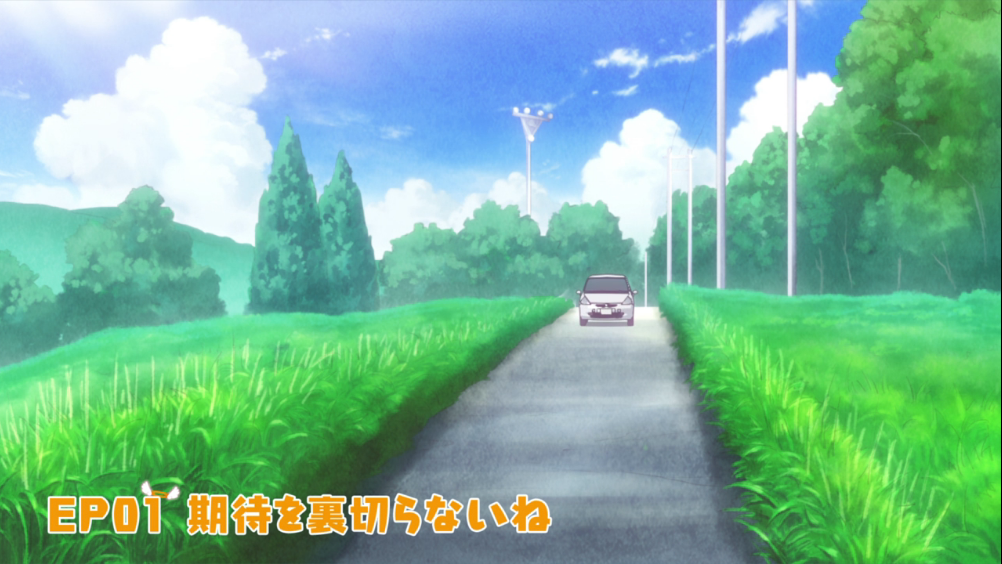
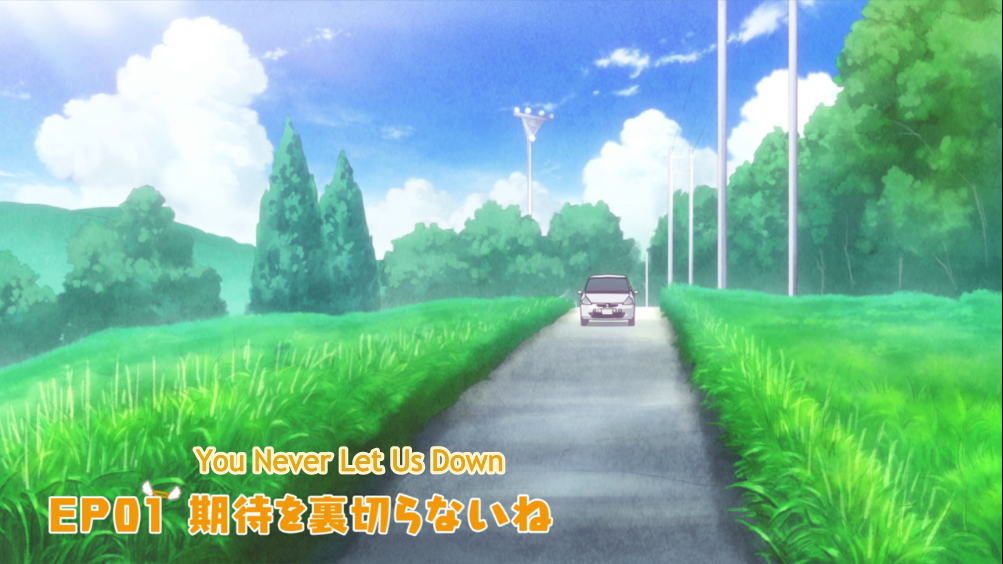
EP01 期待を裏切らないね
期待(きたい)を I explained this in a previous N3 Verb segment. You can find that here.
Here’s what I broke it down to:
期待する
きたいする
expectation; anticipation; hope
期 = period, time, date, term
In this context = opportunity, chance
待 = wait, depend on
So if we go in reverse, we have “depend on chance” or “depend on opportunity”. In other words relying on an opportunity or a chance that comes up for you. Kind of like how Sakura was expecting Kero to explain the Clow Cards.
The を is a direct object particle that is leading into an action. Let’s see what verb we are working with.
裏切らないね The first kanji 裏 can mean “back” while 切 is from the verb 切(き)る which means to cut. Put together you get the verb 裏切る. So someone cutting another person’s back? Sounds like back stabbing to me. Funny how words have similarities between different languages. Gotta love it. *Ahem* Anyway…
This verb 裏切る means “to betray”. However, the word we are looking at is in the negative form of this うーverb 裏切らない. So, it means something like “not to betray” or “don’t betray”.
Put this with 期待 (expectation), you get a rough translation like “don’t betray expectations”. Meaning that someone is always dependable. Like people can count on them.
Now the ね at the end here is used to get someone to agree with you. Kinda like “right” or “don’t you think”. Think I’ll leave this out. In addition I think I’ll take some liberties and try to bring that “dependable” feel to the surface of my translation.
We Can Always Count On You
Very good. This title comes from a special episode from the series called “私に天使が舞い降りた!” aka “An Angel Flew Down to Me”. It’s called わたもて or Watamote for short. The story is about a shy college girl named Miyako who works on cosplay outfits. She has a tomboyish little sister named Hinata (who calls her sister みゃーねえ(mya-nee)). When Hinata brings home her classmate, Hana Shirosaki, Miyako is quickly enchanted by her cuteness and begins having her dress up in cosplay in exchange for sweets.
It’s a nice slice of life anime so if that is your thing I recommend it.
Fought these twins named Amy and May at the gym. Looks like this will be a bug type Gym. Toriyama and Hanabi can handle this Gym with no problem. I want Peter to get stronger so I’ll let him fight a bit. Found out that Kochou’s Confusion move is super effective to poison type Pokemon. That’ll come in handy. I also heard that bug types evolve faster than other Pokemon. So that’s why Kochou evolved so fast.
This one kid had this cool looking Pokemon named Beedrill. It went down in one move thanks to Rock Lee’s Rock Throw. I think that’s everyone. Now it is time to take on the gym leader. His name is Buggsy? Sounds like Buggy from One Piece. Regardless, I better take him seriously and use Hanabi or Toriyama first.
One of his Pokemon was a kind of pushover. Then he sent out a Pokemon with scythe-like arms named Scyther. It kept using Fury Cutter. At first it wasn’t that strong but it kept getting stronger and stronger. Bombarded it with Smokescreen. It gave up on that move and started using Quick Attack… but it kept missing! One more Ember and… it’s still moving?! Hanabi used Ember again and it went down. His last Pokemon… was a Kakuna… that’s a bit anticlimactic.
Kochou’s Confusion took care of it. After the battle, Hanabi started glowing! She’s evolving.
Man she looks so cool. She evolved into a Quilava. I got the Hive badge and now I can use Cut outside of battle.
He also gave me TM 49 “Fury Cutter”. I’ll definitely use this. I wonder where I can find this move called Cut though. Can one of my Pokemon learn it naturally or is it like a TM?
In conclusion, I hope that this series is helpful with your journey to learning Japanese and/or taking an interest in the country’s culture. Until then… また来週!
Used to describe a noun in further detail. I often use this in the Pokemon nuzlocke entries for Pokemon. Like, “the Pokemon named/called Pikachu” would be “ピカチュウというポケモン”.
N + という + N Phrase + という + N
Ex: 真っ赤という色が好き。
(I like the color that is deep red.)
Ex: 僕は「名探偵コナン」というマンガとても気に入っています。
(I really like the manga called “Detective Conan”.)
[ということだ]
I’ve heard that, rumor has it that
I can think of two ways to use this grammar:
Talk about stuff that you heard from someone else. You can use によると to describe where you heard the information.
Describe something, guess, or give a conclusion to something. You can use つまり to make it clearer to the listener. It’s kind of like という意味.
V[Dict-Form] + ということだ Phrase + ということだ N + ということだ
Ex: テレビによると、「事件はまだ解決されていない」ということだ。
(According to the TV, it seems the case is not solved yet.)
Ex: 彼女はもう会わないと言った。つまり、僕らは別れるということだ。
(She said she will never see me again. It means that we are breaking up.)
Ex: N3の試験の結果は100点、つまり合格ということだ。
(I got a 100 on the N3 exam. In other words, it means that I passed.)
This one is a bit tricky but think of a type of transportation that has wheels. These wheels can revolve around and around to get you where you need to go. Like when you are driving a car or another vehicle that has wheels. Like a moped in this protagonist’s case.
Just make sure you look out for truck-kun whether you are driving or not.
対話/DIALOGUE
Going shopping for clothes. Do they have it in red?
[Going shopping] A: Welcome. Are you looking for something in particular? B:Jeans and a shirt. Do you have any shirts in red? A:Yes, we have many different colors. What size are you? B: A medium. A: These are all mediums. B: May I try this on? A: Yes. The changing room is over there. 5 minutes later B: How much is this shirt? A:It’ll be 1,000 yen. B: Then I’ll buy this one.
タイトルを見る/WHAT’S IN A TITLE
ダンジョンに出会いを 求めるのは間違っているだろうか 外伝 ソード・オラトリア
ダンジョンに出会(であ)いを
The first word is katakana which usually points to a foreign language word or a name. Luckily it is the former. This word means “dungeon”.
The particle に is used to locate a place. You usually see this translated to “on, at, in”. So someone is going to a dungeon to do something. Let’s take a look at the word attached to this particle.
出会い is from the verb 出会(であ)う which means to meet a person. 出会い is the noun form of this verb. It can mean meeting, encounter or rendevous.
※Note when using 出会う:This is only meant to meet for the first time. Once you have met the person, just use 会(あ)う. The を particle is used to indicate the direct object in the sentence. This particle sets us up for a verb.
This alone gives a loose translation of “An encounter in a dungeon”. Like Pokemon… mystery dungeon?
求(もと)めるのは
The kanji 求 means want, desire. From this we get three meaning of the verb 求める:
to want or to wish for something
to request or to demand
to search for, to hunt (a job), or to pursue (pleasure)
The title is suggesting that you are trying to meet people in a dungeon, so it would probably be best to go with meaning #3. If they wanted to search for someone, wouldn’t 探す, suffice?
It seems like this verb is implying that the person you are encountering is someone that you are pursuing for pleasure here. As if they are trying to meet a guy or a woman (maybe girl or lady would be less wordy) while in the dungeon. For example, flirting with them, chatting them up while slaying monsters… stuff like that.
Sounds like ナンパする (pick up/hitting on women) would be better choice in verbs for that.
Add this with our last rough translation and you get: “Meet a Girl/Guy in a Dungeon” or “Have an encounter with a Girl/Guy in a Dungeon”. I think I’ll go with girl here.
Adding from the ナンパする part: “Hit on Girls in a Dungeon” or “Pick up Girls in a Dungeon”.
間違(まちが)っているだろうか
間違っている is the active verb of 間違う. To get this form you turn 間違う into it’s てーForm which is 間違って and then add いる.
Think of the active verb as adding a “ing” to the end of the verb. 間違う means to make a mistake, to be incorrect, or to be mistaken. A good way to translate this would be “being wrong”.
The だろうか at the end of this sentence is an expression that mean’s “don’t you think”. You can use it to either get agreement from someone or to get them to understand where you are coming from with your own opinion.
Since this is a question, it is best to reword “being wrong” to something else. Maybe drop being and make the phrase become “is it wrong?” would work.
So for this I’d translate it to: “Is it Wrong to Hit on Girls in a Dungeon”
外伝(がいでん)ソード・オラトリア
The kanji 外(がい) means “outside” while the kanji 伝(でん) can mean “transmit, go along, walk along, follow, report, communicate, legend, tradition”.
Perhaps this word got it’s meaning through putting outside (外)and legend(伝)together. It is outside of the legend or main story. In other words, a “side story”
We’ve got another instance of katakana here which just translates to “Sword” and オラトリア translates to “Oratoria”. It seems to be Latin for rhetoric or oratory. Since this is a side story I’m assuming the rhetoric (or perhaps the point of view) of this story will be done by a side character. A certain side character with a sword.
I’ll keep it simple and put Sword Oratoria
In all this is what I got:
Is it Wrong to Hit on Girls in a Dungeon Sword Oratoria
I couldn’t find an English title for this anime, so I found a game that seems to center around the main story that has translated it.
Very close. Somewhat confused on why they put “to try to” here though. Nonetheless, this title comes from a side story that is in this anime. The title is fairly long so I’m glad they have an abbreviated name “DanMachi”.
This side story tells the tale from Ais Wallenstein’s point of view. It starts from her encounter (出会い) with the Bell Cranel and seems to end around episode 14 of the main story.
The interesting thing we get from this side story is Ais acting more “human” than I thought. She comes off a bit robotic in DanMachi but in Sword Oratoria we get to see the actions that lead up to her interactions with Bell more. Even though she is strong, she still has struggles of reaching more heights (aka Level 6).
Not only do we get to see more sides to Ais, we also get to see the girls in Loki’s familia and how they train a competent newbie that lacks confidence.
Fought some lackeys. They seem to only care about making a quick buck off of the Slowpoke. It turns out their tails grow back but doesn’t it still hurt them? Besides, you’re taking them from this town. I wouldn’t want them taking Sango from me. There are a couple of Slowpoke down here, too. Hmm? This one has some mail. This must be Kurt’s Slowpoke. No wonder Kurt came down here. I’ve gotta do something.
Looks like there is one more lackey left. He’s not going to listen to me because I’m a kid so I’ll beat him in a Pokemon battle. He had this tough Pokemon named Koffing. After we beat them, they left. So Team Rocket is back, huh?
I went back to the house with Kurt and his Slowpoke. He gave me a Lure Ball as thanks.
He’ll also make pokeballs from apricorns for me. I gave him the white apricorn and he told me it will take a day. In the meantime, I’ll take on the gym here. Wonder what kind of Pokemon this gym leader has.
In conclusion, I hope that this series is helpful with your journey to learning Japanese and/or taking an interest in the country’s culture. Until then… また来週!
My first impression of the novel was that it has nostalgia, but it’s a little bittersweet tale of growing up and finding your way in the world.
ENTERTAINMENT
This series was one of my first anime (and most likely my first isekai).
I haven’t seen the movie that this novel is adapted from, but thanks to this, I think I will. This novel portrays how it can be hard to be an adult at times, but it encourages us to move forward into the future. That’s the kind of message I got at least. I did want the digiDestined from Adventure 02 to play a bigger role but that’s okay.
Speaking of Adventure 02, it seems to undermine the ending where the cast is even older than they are now and they still have their digimon. Perhaps they are putting into consideration that at this time in the novel they thought they’d never see their partner again once they have disappeared. However, if I take into consideration that they end up seeing their digimon again someday, it might check out.
Overall, I had a good time with this novel.
LANGUAGE LEARNING
The Mirai Bunko version was made for kids in mind so it is a good read if you are around N3 level. Plus it has furigana which makes it easier to look up words in a dictionary. The Dash-X version is also available for more advanced readers.
There are some vocabulary that is a bit more advanced but with a dictionary (I use the Takoboto app). Found many new words like ブレます(to blur an image from moving the camera)猶予期間(grace period)and 専門的(technical). The grammar was fairly easy.
If you’d like to see a coming of age story or you are familiar with the original Digimon Adventure, then this book might a good choice for you.
受=accept, undergo, answer (phone), take, get, catch, receive 取=take, fetch, take up
This is a combination of the verbs 受ける (to receive) and 取る (to take). It can me to receive something from someone. Like chocolates on Valentine’s Day. Or in this case Deku receiving “One For All” from All Might.
It can also mean that you understand something. Like someone’s feelings or what they are trying to express.
対話/DIALOGUE
The call went fine. Let’s see how the real deal goes.
[Interview Pt. 2] A:Why are you interested in this part-time job? B:Because it sounds interesting. I can learn a lot of things, I can use both Japanese and English, and I like translating. A:Have you translated before? B:Yes, I have translated articles. Here are a few articles I have translated.
Manager is reading…
A:You sure can translate some complex articles in many topics. Did you take the JLPT? B:Yes, I passed the N3. I plan on taking the N2 in December. A:Can you start next week? B: Yes. I’ll do my best. A:Best of luck.
タイトルを見る/WHAT’S IN A TITLE
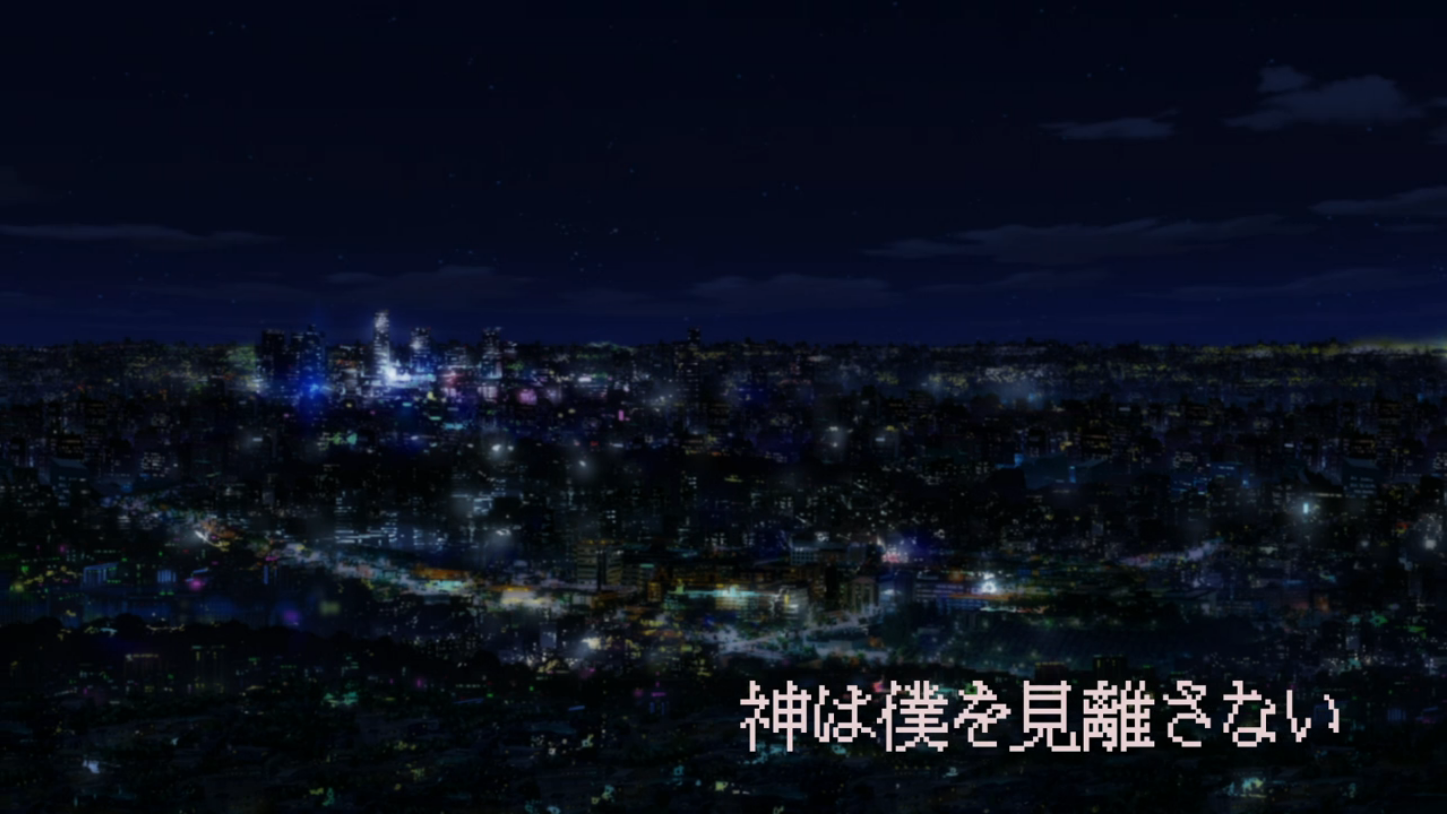
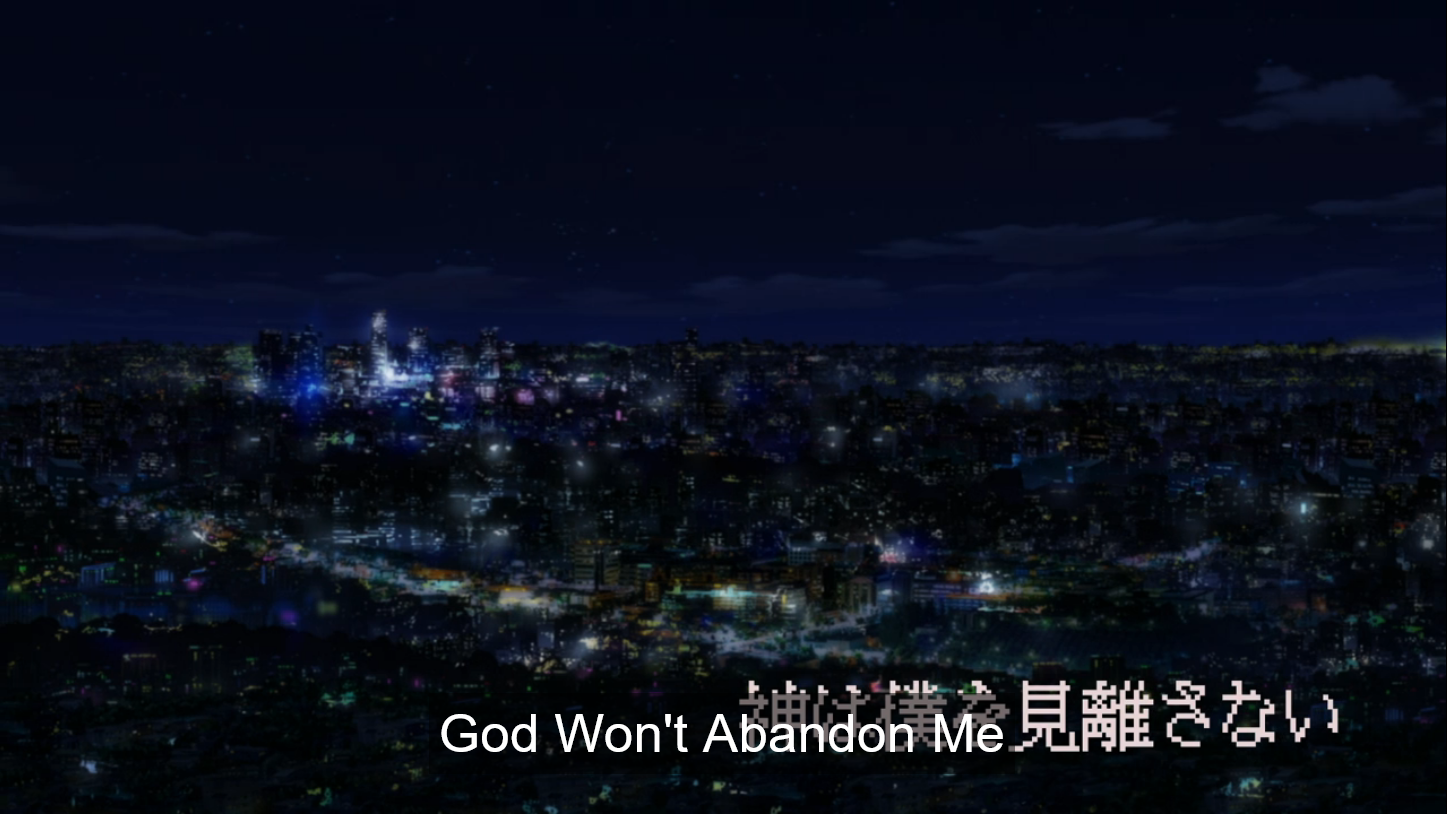
神は僕を見離さない
神(かみ)は Simply means “God”.
僕(ぼく)を This is the personal pronoun for boys. However, you will sometimes come across a girl using it. They call these kinds of girls ボクっ子(ぼくっこ).
This usually is translated to “me” or “I”. The をparticle here is being used to indicate an action is going to be taking place on the word 僕.
見離(みはな)さない The first kanji from this verb is from the verb 見る (to see). The second kanji from this verb comes from the verb 離す(to separate, part, divide or keep apart)
Seems like this verb is describing to take your eyes off of someone. I imagine someone turning away from another person and walking away.
By looking at the definition for this verb that isn’t far from the truth.
見離す means to abandon, to give up on, or to desert.
However, 見離さない is the negative form of this verb. Meaning that someone is not being abandoned. I think I will go with “Will not Desert” or “Won’t Desert” for this title.
God is the one that is not deserting the person (僕) in question here. In this context it would be weird to use “I” so “me” would be better.
Put this together with the rest of the title and we get:
“God Will Not Desert Me” or “God Won’t Desert Me”
I think I’ll go with the latter.
God Won’t Desert Me
This title is brought to you by Magical Girl Site. It is an anime featuring magical girls with an extra edge. The main character Aya Asagiri thinks her life couldn’t get any worse. Her brother abuses her, her classmates bully her, and no one seems to want to help her out. Then when all hope seems to be loss, a mysterious website called the “Magical Girl Site” grants her a power through a magic stick. Horrified by what this magic stick can do, Aya teams up with other “magical girls” to find out what the Magical Girl Site’s true intentions are and put a stop to them.
When I say this anime is edgy, I really mean it. Just look at what the bullies did to Aya’s shoes that were in her locker.
Here’s Gigguk talking about the show.
It has an open ending but you can find this anime on HiDive or Amazon Prime.
Found a tree behind someone’s house. I thought it was a berry but it turned out to be an apricorn. What do I do with this? A woman close by told me that a man named Kurt who lives in that house makes pokeballs out of them. So that’s how Pokeballs are made? Cool.
I talked to Kurt and he told me about Team Rocket being behind the Slowpoke incident. Ah, now I remember. It’s those guys Red took care of 3 years ago. But why are they still an organization? Before I could ask Kurt some questions, he rushed out of the house leaving his granddaughter behind. I reassured I’d get him back home soon and chased after him.
When I got to the well, I found Kurt. He looks like he took a fall down the stairs. He decided to sit at the entrance. Can I really take on Team Rocket? The same organization that Red took down. I’m the only one around so I’ve gotta do it. Suddenly a Slowpoke appeared out of nowhere. It took me three times to catch her so I think I’ll name her Sanko. Nah, Sango sounds better. Okay, time to take on Team Rocket.
In conclusion, I hope that this series is helpful with your journey to learning Japanese and/or taking an interest in the country’s culture. Until then… また来週!
By using the てーForm and the verb はじめる (to begin), you can express that that the action is the first time you’ve done that thing and express something you have discovered after doing said thing.
V[てーForm] + はじめて
Ex:落語を見てはじめて日本語に興味を持ちました。 (I didn’t get interested in Japanese until I watched rakugo.)
Ex:彼女は会社で勤めてはじめて、ゲーム作りのことの難しさを気づいたそうです。
(Not until she worked in the company did she know how hard it is to make a game.)
[てかまわない]
it doesn’t matter if
かまわない is a verb that means “don’t care” or “don’t mind”. You can use this to ask for permission (like you would with てもいい). You can also either put something in a negative or positive light by expressing it as something that isn’t important.
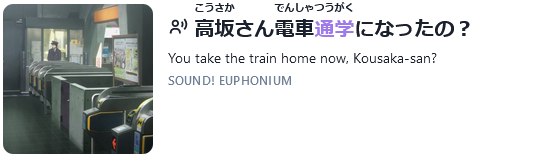
So we have commute coming from the kanji 通 and the kanji 学 is from the word 学校 which means school. Put that together and this verb/noun is straightforward. This is used for when you are specifically commuting from and to school. Like how the characters in Sound! Euphonium takes a bike or a train to and from school.
[Interview Pt. 1] A:Yes, this is “Hanamaru’s Translation Company”. B:My name is Isiah Scott. Is there a Mr. Kobayashi here? A:Yes, that is me. B:I saw your ad for a part-time job. A:I see. Well, let’s meet and talk. Can you come to the office at 2:00 p.m.? B:I can’t come today, but I can come tomorrow. A: I see. How about tomorrow at the same time? B: 2:00 p.m. Understood.
タイトルを見る/WHAT’S IN A TITLE
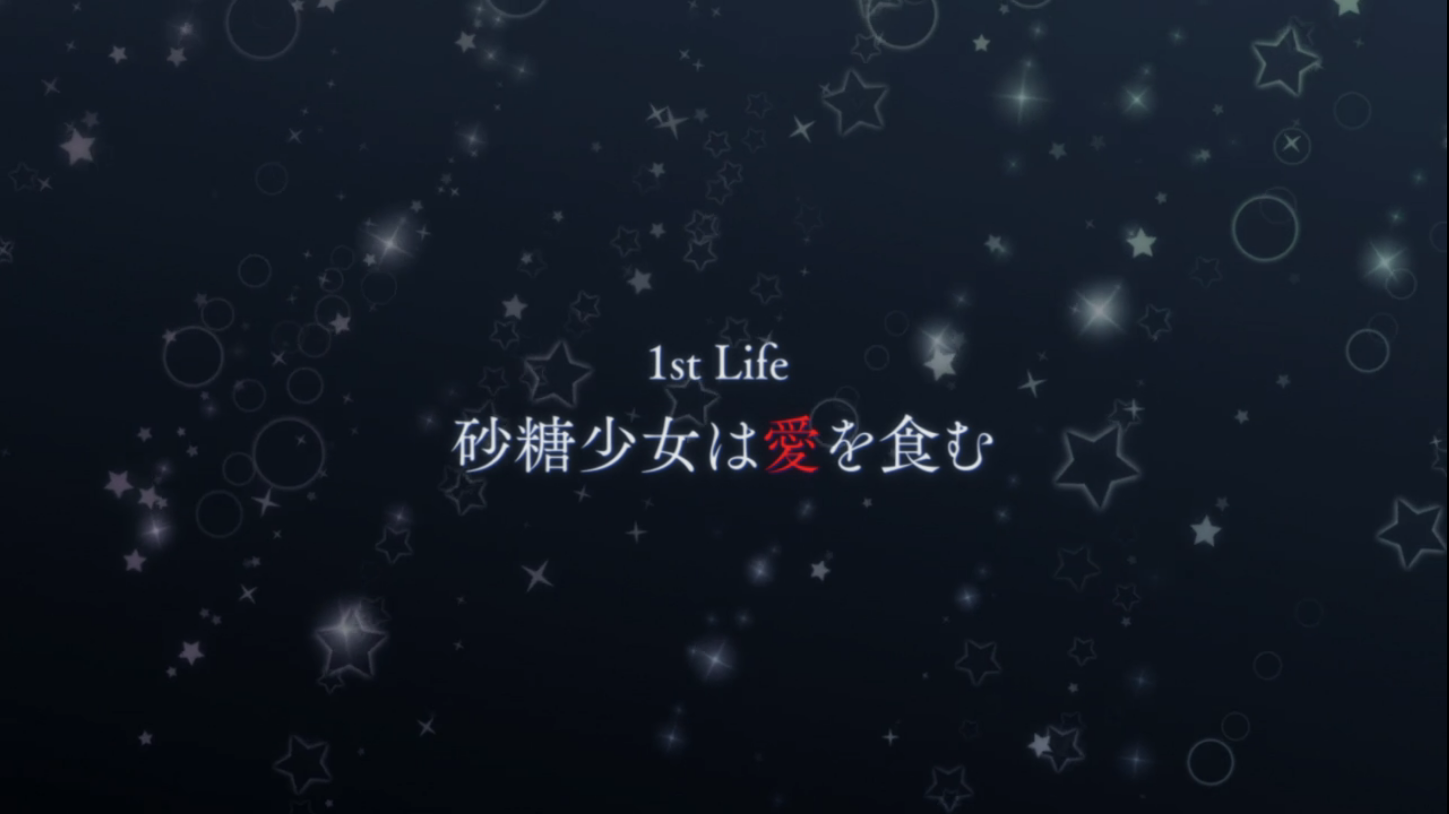
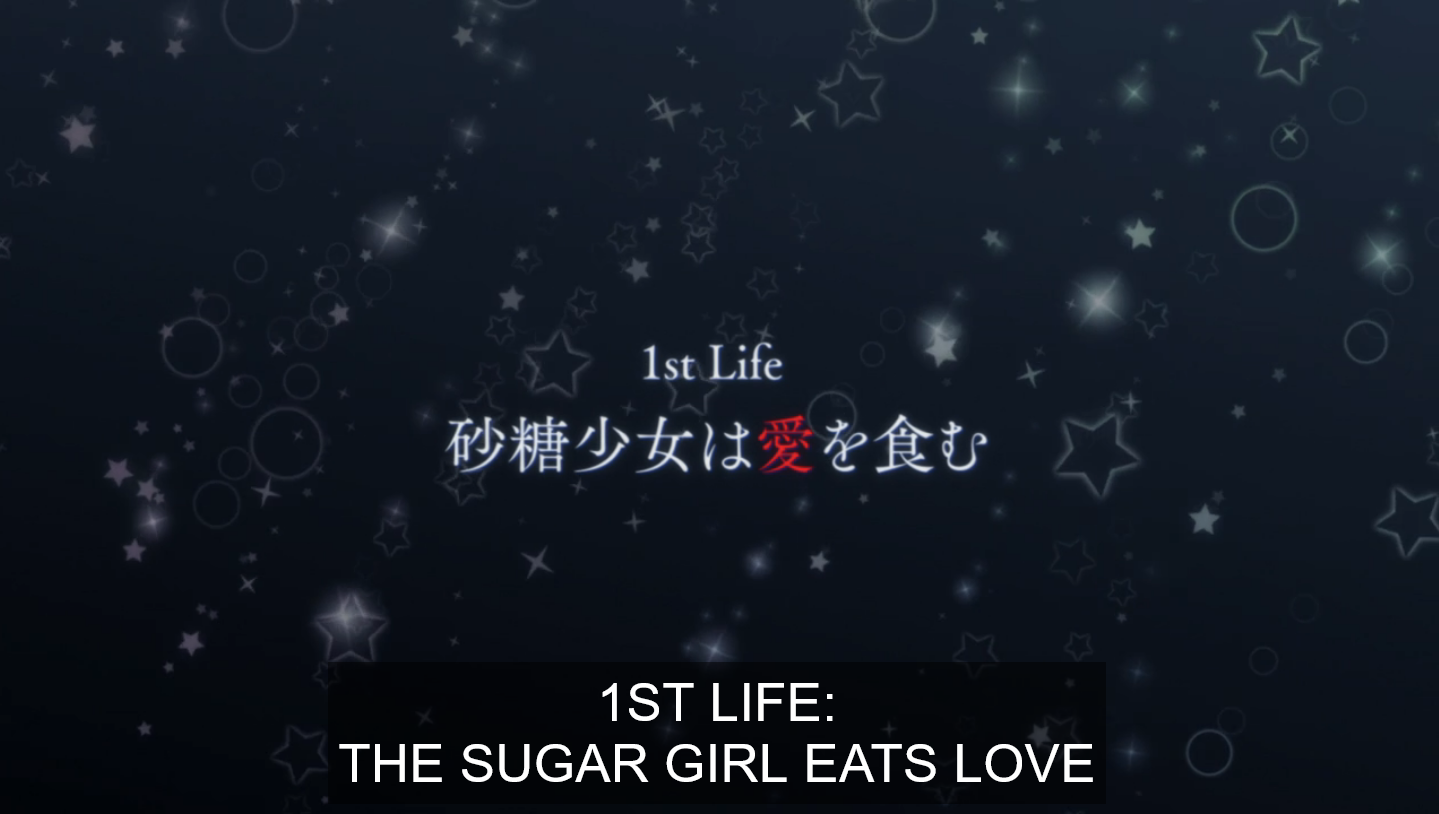
砂糖少女は愛を食む
砂糖(さとう) The first kanji 砂 means sand while the second kanji 糖 means sugar. Sand is grainy so if you think of it like that you get granulated sugar.
少女(しょうじょ)は The first kanji 小 can mean little or small. The second kanji 女 means girl. So a little girl. This is usually used for kids up until adulthood. Put this together with 砂糖 we get “Sugar Girl”.
The は here is being used to make this girl the center of the topic. We’ll hold off on translating it to something like “is” until we see what comes next.
愛(あい)を食(は)む If you are familiar with my usual example of Gaara’s scar you should probably catch on to this. The first kanji means “love”. Considering を follows this word it means that this girl is doing something with love.
The kanji 食 from the verb 食む is from a basic verb that means to eat (食べる). The verb 食む can have two meanings:
to eat things like grass or fodder. Like a cow grazing on grass.
to receive money from something like a salary.
I’m positive they are talking about the first definition here. I gave the example of a cow grazing on grass. There’s not many things that they can eat. So, this girl must have a strong desire for love. Taking this into consideration, I think I’ll go with “feed” or “devours” instead of “eat”. With this it would translate to something like “Sugar Girl Feeds on Love”. I’ll add “the” and “who” in there to give this Sugar Girl some more specificity.
In all we have:
The Sugar Girl Who Feeds on Love
Pretty good. This title comes from the anime Happy Sugar Life. It follows the story of a pink haired girl named 松坂 さとう or Satō (Get it? Satō = 砂糖(さとう)) Matsuzaka who is taking care of an elementary school girl named 神戸 しお or Shio (塩(しお)= salt) Kōbe. Shio becomes very attached to Sato as they live together.
But something just isn’t right and throughout the first episode you get this feeling that she’s got a few dozen screws loose. She has a strong desire to protect that feeling of love and her life with Shio, even if it means committing crimes or even killing people.
I avoided a guy that looked like a Pokemon trainer and healed my Pokemon at the Azaela town Pokemon Center. Before I got to the town, there was a man in all black that guarding a well. Wonder what that is about.
Like I thought, that guy was a Pokemon trainer and he had this really strong Pokemon named Machop. It’s Low Kick was so strong, but we won. After the battle Kochou evolved again. She turned into a Butterfree and learned Confusion. I wonder why no one else has evolved yet.
That guy in black is really suspicious. And now there’s one blocking the entrance to the gym. Who are these guys and why do they look familiar? It turns out that Slowpoke has disappeared from the town. Rumor has it that their tails are being sold. Are these men in black behind it?
In conclusion, I hope that this series is helpful with your journey to learning Japanese and/or taking an interest in the country’s culture. Until then… また来週!
I like to think of this as another way of saying たばかり. It expresses that you have done something just after doing something else.
Ex:地下街に来たとたんに、面倒な売り子を避けてみた。 (As soon as I got to the underground mall, I tried to avoid the annoying retailers.)
Ex:ジャムを食べたとたんに、違和感を感じがした。 (Just as I ate the jam, I knew something was wrong.)
[てごらん]
(please) try to, (please) look
This grammar is used mostly in a place where keigo is used. Like a business. Bosses and other seniors of a company use this speech for their subordinates.
V[てーform] + ごらん(なさい)
Ex:プロジェクトを担当してごらんなさい。 (Please take on the project.)
Ex:質問があるなら、倉田さんに聞いてごらんなさい。 (If you have any questions, please ask Kurada.)
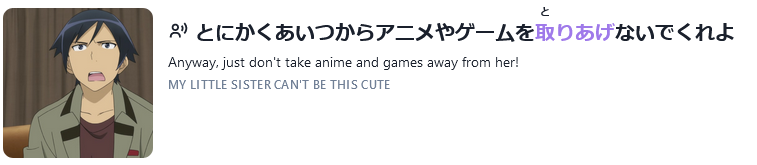
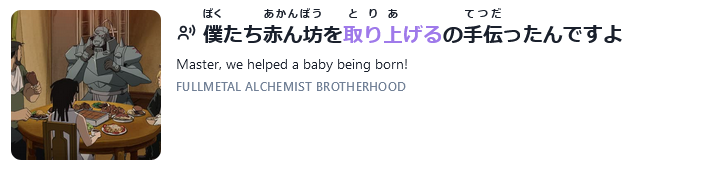
This verb has various meanings. Like to pick up a couch while moving. Or to take away something like Kyosuke’s dad trying to take away his sister’s stuff. Or even deliver a baby in Fullmetal Alchemist.
対話/DIALOGUE
Looking for bookstore can be tough. Luckily you can ask for help,
[Getting lost] A: Excuse me. May I have a moment? B: Yes, what is it? A: Where is this bookstore called Sunflower Bookstore? B: Do you have a map? A:Yes, I’m using a map app on my phone, but I’m not very good at these kinds of things. B:I see. We are here now. Do you see that bus stop? A:Yes. B:Turn left at the bus stop. Then you will see a bookstore on your left. A:Oh, thank you so much. B:You’re welcome.
タイトルを見る/WHAT’S IN A TITLE
オトーリ
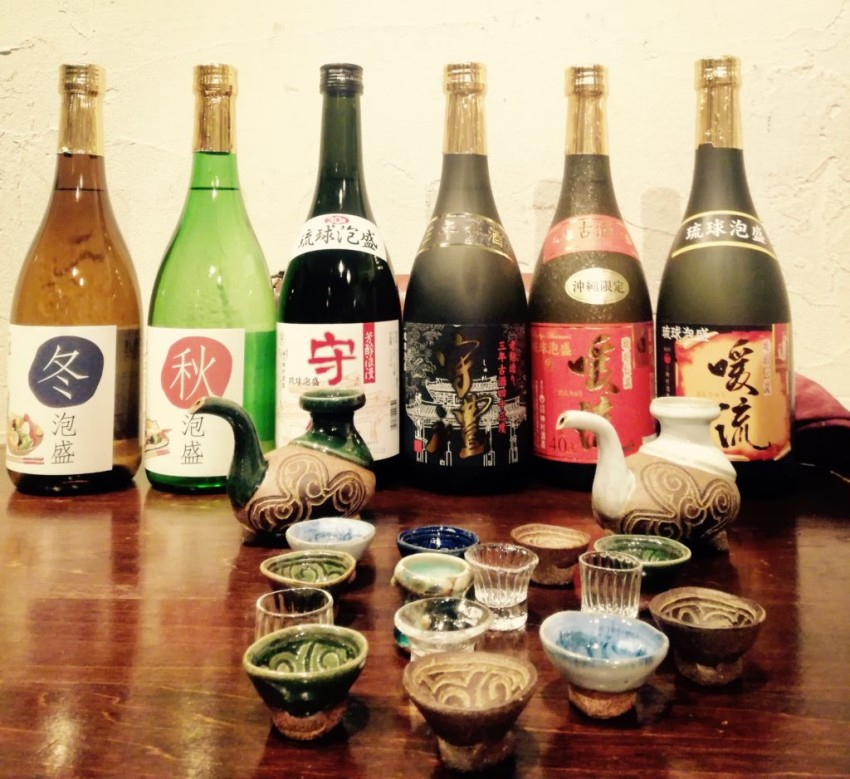
It’s only one word but I wanted to talk about this drinking culture that started on Miyako Island. ”Otori” is a drink made with Awamori, an alcoholic beverage in Okinawa, Japan .
You can find this kind of thing at drinking parties. In most cases, the awamori is not served straight. Considering the high alcohol percentage, it is usually diluted with a lot of water.
Here are the steps in Otori.
1: Decide on a “parent” in the group that will run the “Otori”.
2: The parent pours the alcohol into the cup, says a few words, and drinks.
3: The cup is filled again and passed to the person next to them. The person that receives the cup from the parent drinks it and returns the cup to the parent.
4: The parent fills the cup again and passes it to the next person.
5: This continues until the cup has been passed to everyone, and after one round, the next parent is appointed and passes the baton to the next person.
6: The next parent repeats the steps, starting from #2.
It’s basically a chain of people drinking alcohol until everyone takes on the role as the parent. The longer the chain the more alcohol everyone will consume. If you don’t want to get incredibly drunk, it’s best to opt out when you reach your limit.
If you find it difficult to say no, you can make use of the “otori card” which is designed to prevent excessive drinking. It’s a good idea to use it so you can decline the next drink. The “otori card” can be issued at the Miyako Public Health Center but only on weekdays.
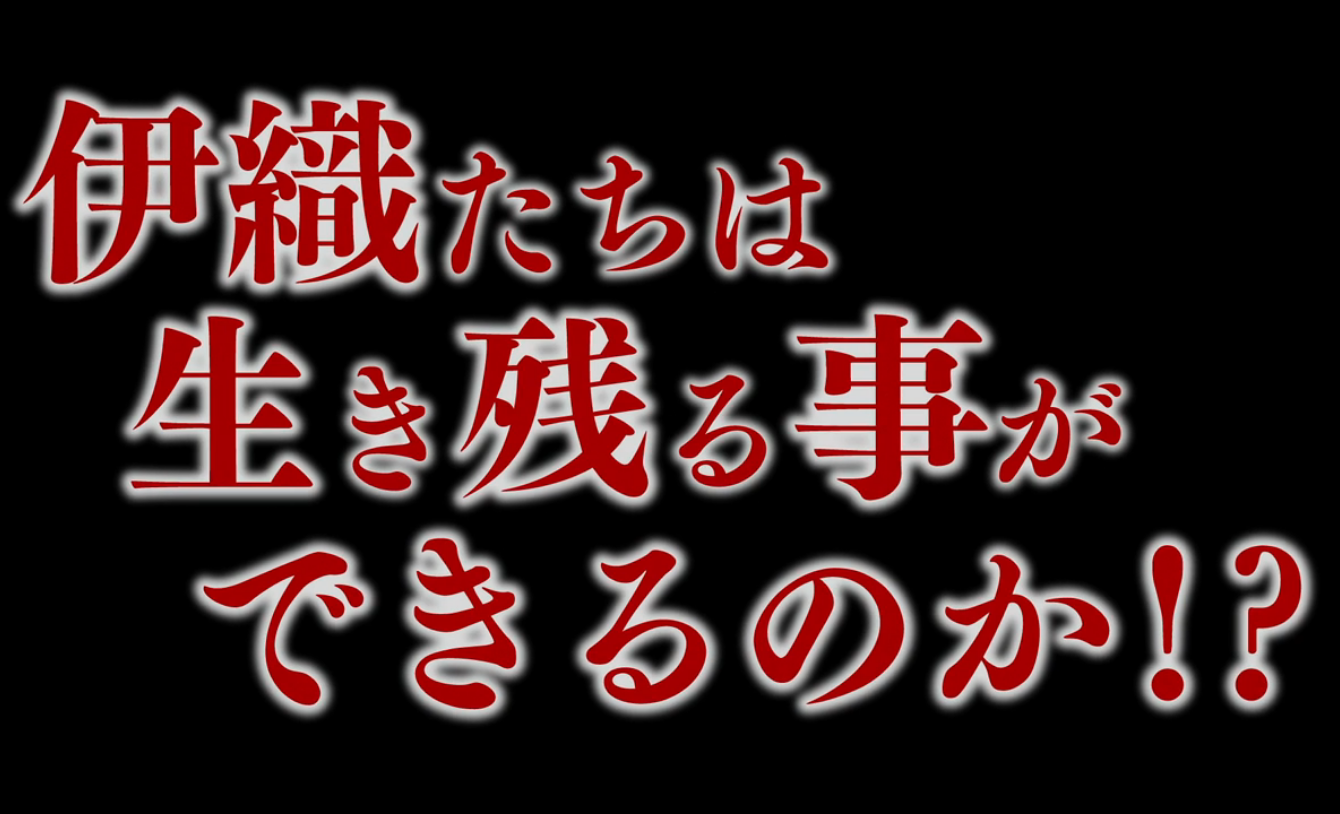
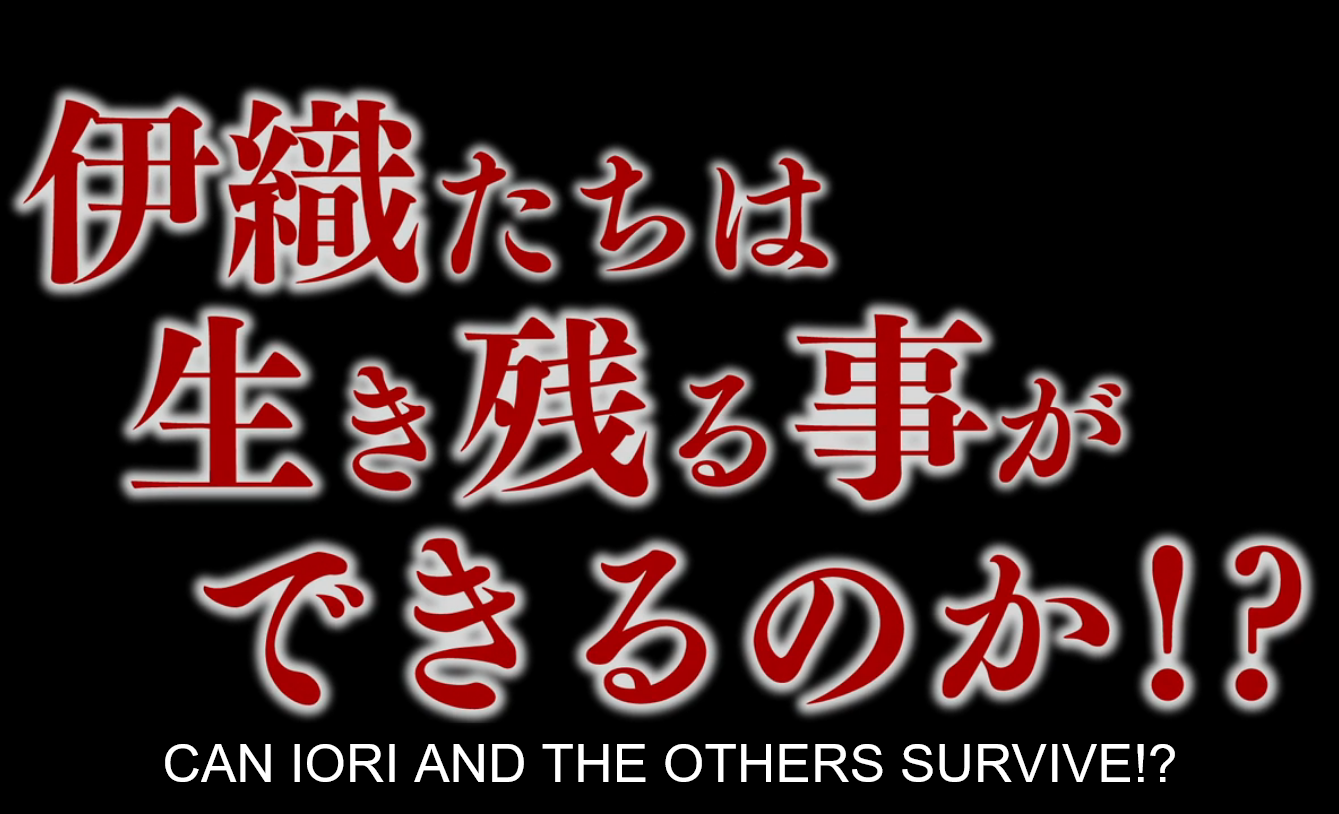
伊織たちは 生き残る事が できるのか!?
伊織(いおり)たちは Iori is the name of the main character in this anime. When you see たち put with a name it doesn’t mean there are clones of that person. It is used to say a group of people that are tagging along with someone. This someone is specified by a name or a title.
For instance Scooby and the gang would be “スクービーたち”.
I would translate this to “Iori and his friends” or “Iori and the others”. The は suggests that they are the key point in this sentence so let’s go on to the next segment and see what they are getting up to.
生(い)き残(の)る 生き残る consists of two verbs: 生きる(to live) and 残る(to remain). Something like to remain alive. Or in other words “to survive”. Looks like Iori and the gang are dire straits. Let’s move on to the final segment.
事(こと)ができるのか ことができる is a basic grammar. When paired with a plain form verb you can use it to express that you can do that said verb.
生き残る事ができる = Able to survive/ Can survive
But what’s with the のか at the end. This is a sentence ending particle that is used to question the statement made before it. In other words, Iori and the others live on the line and this narration here is wondering if they will be able to survive.
With a bit of sprucing up I’d put this as:
“Can Iori and his friends survive?!”
Pretty close. This title comes from an anime called “Grand Blue” which is adapted from a manga. When I started watching this, I thought it was going to be about a guy getting into college and doing some diving… I was (mostly) wrong. As you can see from my explanation on Otori, they drink copious amounts of alcohol in this anime. And for some reason they alway strip like they are Gray from Fairy Tail. Makes me kind of wonder if people were like this during my years at university.
Found a bunch of trainers on a bridge. Looks like they are fishing. Bet they have a lot of water type Pokemon. Luckily, Static just learned thundershock. That was easier than expected. Some guy tried to sell me a Slowpoke tail for 1 million yen. That’s super expensive. Why the heck would anyone want that?
Healed my Pokemon and got an Old Rod from a fisherman. Surely there’s gotta be a better rod than this. I entered Union Cave. It’s definitely brighter than that Dark Cave. Had a battle with this guy that had a huge rock Pokemon named Onix. Glad I taught Rock Lee Mud-slap. Guess it did come in handy.
I wanted an Onix but a Zubat popped up. Caught it with a Great Ball. Think I’ll name her Kurohane.
From what I heard from other trainers, you can hear this terrifying roar on Fridays. Maybe I’ll come by some other time. Got out of the cave and tried to catch a new Pokemon on Route 33. They only have Zubat and Rattata here. Looks like there’s a town up ahead so I guess I’ll go check it out.
In conclusion, I hope that this series is helpful with your journey to learning Japanese and/or taking an interest in the country’s culture. Until then… また来週!
Ex:君は、例えば本を読むような趣味がありますか。 (Do you have a hobby like reading books?)
Ex:どこに食べに行きたいですか?いろんな店があります。例えば、ラーメン屋。 (Where do you want to eat? There’s a ton of places. For example, a ramen shop.)
[結果]
as a result of
This grammar point is used to express that due to some action or someone or something.
V[Past-form] + 結果 N + の + 結果
Ex:彼は思案した結果、クワッスを決めた。 (After he thought it out, he decided on Quaxly.)
Ex:日本語しか読めない本の結果、語彙力が増強しました。 (As a result of reading only Japanese books, my vocabulary has built up.)
Ex:証拠品を見た結果、真犯人が現れた。 (As a result of looking at the evidence, we found the true culprit.)
Ex:努力の結果、何でもかんでもできますよ。 (After putting in the effort, you can do anything.)
N3 動詞/N3 VERBS
取れる とれる to come off; to be removed; to be obtainable
取=take, fetch, take up
There are many meanings for this verb. This is the potential form of the verb 取る. The potential form of a verb is used when you want to express an action that can be done.
Or can’t in the case of Ryuji trying to clean mold.
The Spring 2022 anime are approaching their climatic end.
A variety of titles will be heading to their finale while some will be starting a new cour. What anime will receive praise from the readers of “Anime! Anime!”?
“Anime! Anime!” made a survey to get feedback on the Spring 2022 anime season. From June 13th to June 20th their readers were given a chance to take the survey. 456 people took the survey.
45% males and 55% females took the survey giving women a bit of a lead in the polls. The age group mainly consisted of young people. 40% of the survey was taken by people below the age of 19 and about 20% were in their 20s.
First up is “SPYxFAMILY” with 24% of the votes.
This anime features Lloyd Forger, who play as a fake family member for his mission as a spy. Some heartwarming descriptions by the survey takers consisted of things like “The 3 family members having something to hide and how they overcome several incidents is fun to watch” and “They may not be a real family, but every now and then, they show a glimpse of what it is like and it’s wonderful to see”.
Others praised the cast and the theme song with comments like “Not only is the story good, it is great to see new sides to the voice actors that voice these quirky characters” and “The opening and ending songs were different from the anime and pulled me into their world”. This popular anime that has came out on top in this survey will return for a second cour in October.
Coming in second with 10% of the votes is “Ya Boy Kongming”.
The story is about the tactician Zhuge Kongming from the Three Kingoms period is sent to present day Japan where he struggles to promote an aspiring singer named Tsukimi Eiko, to the world. “I like the way he guides a talented yet unknown singer while watching her grow as an artist. I also like how Kongming comes up with strategic plans, gives a helping hand to her rivals, and I enjoy the anecdotes from Romance of the Three Kingdoms is sprinkled throughout the series”. Mixing The Three Kingdoms and music is strange, but Kongming’s magnanimous personality has become popular.
The way the artists support each other and grow together has also won fans over. Like this comment: “Seeing Eiko, KABE, and the others overcoming their individual weaknesses cheered me up. This is the first anime that an anime linked with how I felt.”
“Summertime Render” came in third place.
The story starts out with main character Shinpei Ajiro returns to his hometown in Hitogashima for the first time in 2 years after he receives a notice of his childhood friend’s death. It’s a time-travel, sci-fi story filled with suspense. The respondents gave this anime high praise with reviews like “There were so many good anime this season, but this one is what I was most excited to watch. I was completely absorbed in the mystery with it’s many twists as the story develops.”. Another respondent stated “It’s freaking scary! But I’m dying to know what happens next!!”.
Another comment talked how they were charmed by the art and animation: “The strong contrast between light and shadow gives it a summer atmosphere. The darkness of the shadows also seem to give off an ominous feeling.”.
Summertime Render will continue its 2-cour run of 25 episodes. The anime will adapt the whole story.
For the male viewers, SPYxFAMILY came in first, then Ya Boy Kongming was second, and Deaimon was in third. For the female viewers SPYxFAMILY came in first, Ya Boy Kongming was second, and Heroines Run the Show got third place.
Here are some other comments!
From “Shikimori is Not Just a Cutie”: “Izumi’s every single expression is cute, Shikimori’s demeanor is so cool!! I was so excited seeing these love birds interacting with each other.”.
From “Healer Girl”: “the hand-drawn animation and songs makes this an ambitious work. The musical scenes were well done and the voices and composition were moving.”.
From “Komi Can’t Communicate 2nd Season”: “The change from Fall to Winter with New Year’s, the school trip and Valentine’s Day and the interaction with the classmates’ rich personalities deepens the warm and fuzzy feel of the show.”
From “Kaguya-sama: Love is War”: “I’ve been supporting the series since the first season. The Cultural Festival was the main event. Not to mention the interesting things that occurred as the season got closer to it’s climatic finish. The special ending song was awesome, too!”.
This survey covered many anime with various genres from comedy to suspense. Some anime like “Kaguya-sama” and “Date-A-Live” have had an announcement of a new season after the final episode, which keeps the fans looking forward to what is to come.
Top 10 Ranking
“What was the best in the Spring 2022 Anime (4 month cour) “ 1st SPYxFAMILY 2nd Ya Boy Kongming 3rd Summertime Render 4th Kaguya-sama: Love is War 5th Heroines Run the Show 6th Shikimori-san isn’t just a Cutie 7th Detecive Conan: Zero’s Tea Time 8th Deaimon 9th Tomodachi Game 10th Love Live! Nijisaki Academy School Idol Club (2nd Season)
han: Half of Summertime Render hasn’t even came out yet so the excitement will continue onto the Fall.
Even though this is certainly a masterpiece, its a shame that it’s distribution is limited to Disney Plus, which limits the number of people who can watch as it airs.
Since it has a second cour, it would be great idea to put the first half of the show for free for a limited time on something like Abema.
It’s not on the list but “Dance Dance Danseur” was the best anime in Spring. The excruciating embarrassment of a boy that does ballet in a typical middle school makes it realistic.
The passion from the protagonist that can’t stop dancing once he starts, the rivals painful upbringing and the heroine-esque character with her own struggles were conveyed very well.
The lively animation and art were also beautiful. It had the same lasting impression on me that “Welcome to the Ballroom” had.
If I had to say it kind of has a sports feel to it. I feel as though there will be new anime showing boys doing things like rhythmic dancing and water polo.
Personally I would have it like this.
1st Mobseka: Trapped in a Dating Sim: The World of Otome Games is Tough for Mobs 2nd Dance Dance Danseur 3rd Summertime Render
The way they set up Mobseka with a bunch of common settings from other isekai is wonderful and the way they carefully depict makes the work surpass the rest.
The art is said to be awful, the stop-motion picture like quality made me pay attention and understand the story more. Dance Dance Danseur was similar to Ryouko Yamagishi’s Arabesque which made it more moving. Summertime Render is a classic sci-fi time travel anime with folkore and other various stories baked in, and it does well playing up the suspense.
I would like to see them do a raking of the reruns next for those who are watching it for the first time. Reruns are a great way to find new masterpieces that I haven’t seen yet. For example, I knew about Hataraku Maou-sama but it was actually interesting when I first watched it. I saw the first season of Saga of Tanya the Evil for the first time and that was interesting.
Such a stupid mistake! This isn’t a ranking anymore. Glad I stopped reading the article. The title’s also off the mark.
Compared to the others, I can definitely recommend Summertime Render, Ya Boy Kongming, and SPYxFAMILY and watch them over and over. The staff’s love for the worlds, the thrills, and comedy are very well done in them. If you can’t bring some spice to something like that, a good singer wouldn’t even save the show.
That last comment had some spice to it. Overall, it was fun to see what made the top 10. I’ve seen a few of them and I plan on watching more along with the Summer season of anime.
[Going to the library] A: Pardon me, do you know where I can find Sherlock Holmes by Conan Doyle? B: I’ll show you. This way please. A: Sure. B: Is this what you are looking for? A: Yes, thank you very much. Have you already read Sherlock Holmes? B: Yes, I’ve read the whole series. A: That’s cool. B: Conan Doyle is my favorite author. A: Mine too. My favorite one is The Hound of Baskerville. B: That’s a good one.
タイトルを見る/WHAT’S IN A TITLE
ヲタクに恋は難しい
ヲタクに
ヲタク is from the word オタク. An otaku is usually defined as someone who is a nerd or someone who is highly interested in something. Like anime, figures, mystery novels, if you name it there is someone out there who is obsessed with it.
ヲタク is a modern version of オタク. Sometimes its shortened to ヲタ. But why the change? For one, there are so many kinds of otakus for every interest these days. Since it has become so commonplace, gamers, anime lovers, and the like decided to change it.
There is a negative connotation with the word otaku. So, to keep themselves separate from the word オタク(and people who use it), they identify as just a ヲタ to seek out people with similar hobbies.
Best of luck when this word becomes more mainstream though.
The に can mean at or in but it can also refer to the person that is a wotaku. As in “for Wotaku” or “as for Wotaku”.
恋(こい)は
This kanji is similar to Gaara’s scar.
This kanji is 愛(あい). The reason I bring it up here is because 恋 and 愛 have similar meanings: Love. However, 恋 specifically means romantic love.
I’ll just translate the は to “is”.
So, we have “For Wotaku love is”. I think “Love is ___ for Wotaku” flows better. But… what is love for them? Is it war? Is it weird? We’ll find out on the next segment.
難(むずか)しい
The kanji 難 difficulty, accident, flaw, etc. This is a basic いーAjective to describe something that is difficult, complicated, or hard. I would I’ll go with complicated because love is complicated for any relationship. And being a Wotaku adds another layer. It’s a bit wordy so I think I’ll rely on the thesaurus here and go with “tough”.
So, I came up with:
Love is Tough for Wotaku
Close. I do like how they put the abbreviated title here. That’s another reason why I love Japanese. The have so many ways to shorten things. Especially when it comes to those really long light novel titles.
But I digress. This title comes from the anime by the same name. It started out as a web manga that explores the relationships between people who are Wotaku. You’d think that it would be better to have someone with similar interests was a partner but as I said before it adds an extra layer of complexity when they might think your taste in your hobbies is questionable or there more interested in something that you aren’t.
I mean Gigguk kind of explained relationships between something similar to Wotaku: Weebs.
Got a call from Professor Elm. He wants me to go see his assistant at the Pokémon Center. Tried to go to Route 32 again but that guy stopped me. Why does he know that the Professor’s assistant is looking for me? So, they want me to take care of this egg that I got from Mr. Pokémon. I’ll put Peter in the PC box for now. This egg can’t fight so I’ll need to get my team stronger.
After getting a Miracle Seed from that strange guy, I caught a Mareep on route 32. He’s so fluffy. Tried to touch it but I ended up getting shocked. Should’ve read the Pokedex. I’ll name him Static.
Shinobu was killed by a Zubat. She hurt herself from confusion and then Zubat used Leech Life. Just my rotten luck. Kochou avenged her.
After the Pokémon battle, Kochou started glowing. She evolved into a Metapod. Guess I’ll go get Static out of the PC.
Battled a girl named Liz. She had a Pokémon I’ve never seen before. It was called a Nidoran. She asked for my number after the battle. I wonder if that Nidoran can evolve. Hopefully I’ll find out next time we meet.
In conclusion, I hope that this series is helpful with your journey to learning Japanese and/or taking an interest in the country’s culture. Until then… また来週!
Used to express disregard for something or an action. For example, even if something is the case or it may be true, someone will still do what they want.
Ex:たとえ真実でも、聞きたくない。 (Even if it is the truth, I don’t want to hear it.)
Ex:たとえ徹夜しても、締切に間に合わないよ。 (Even if I pull an all-nighter, I won’t make the deadline.)
Ex:たとえむちゃくちゃでも、逃げるために、やるしかないんだ。 (Even if it was reckless, I had no choice but to do it to escape.)
Ex:これはたとえ安くても、買わないよ。 (Even if this is cheap, I’m not buying it.)
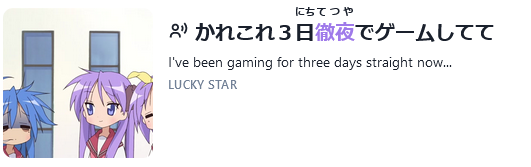
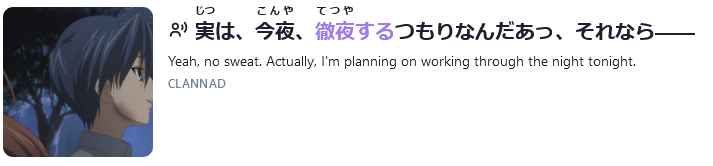
徹=penetrate, clear, pierce, strike home, sit up (all night) 夜=night, evening
Thanks to the last meaning for the first kanji, this verb is pretty straight forward. Ever had a game that you just couldn’t stop playing? What do you do in that situation? For me I stayed up all night and played it like Konata from Lucky Star.
But don’t get me wrong, I’m not a slacker either. During my senior year at university I got a project done in my Asian Architecture course a couple of weeks before the deadline. So I definitely spent a few 徹夜 finishing that up. Kinda like how Tomoya planned to do an all-nighter working on something.
Unfortunately my professor misplaced the paper and I had to give it to him again (-_-;).
対話/DIALOGUE
Two women are at a thrift store when they find a wooden box. What could it be?
[Good Song] A:Isn’t this a music box? B:Oh, it looks like it. I wonder what kind of song it plays. A:Wanna try and listen to it. B:Let’s. A:Ah, it’s so soothing. B:I know right. But you’ve heard it somewhere else. A:Yes, I do. It has a nostalgic feel to it. B:Oh, I got it! It’s [Dearly Beloved] from Kingdom Hearts, right? A:Oh, it is. You’ve got good ears. B:You’re making me blush. Anyway, Shimomura’s songs are amazing. A:You’re going to buy it? B:Of course I am. How much is it? A: Looks like it’s 2,980 yen. I’ll pay for half of it. B: Eh, you don’t mind? A: Sure. B: Thanks.
タイトルを見る/WHAT’S IN A TITLE
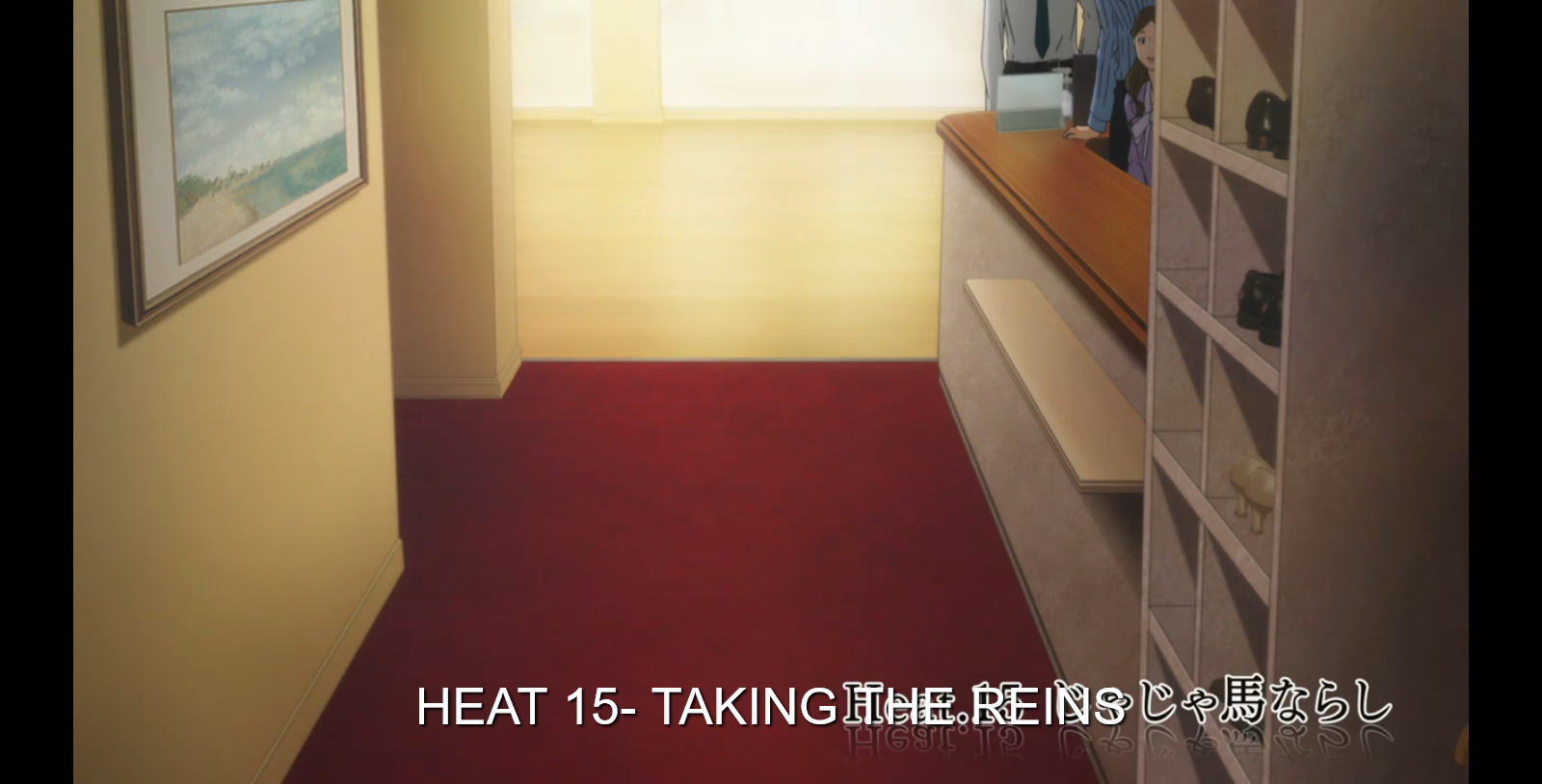
Heat.15 じゃじゃ馬ならし
Heat
I know this in English, but I want to explain what this means in the world of competitive ballroom dancing.
In these competitions there are rounds. However, if a round has too many people, they can’t all dance on the floor at the same time. So to solve that problem, the round can be separated into what are called heats.
According to the Kansas City Dance Classic website, a quarter-final is normally danced in two heats, meaning 12 couples dance then the remaining 12 couples dance assuming 24 couples in the quarter-final.
じゃじゃ馬(うま)
じゃ comes from the kanji 邪 which can mean wicked, evil or bad. The kanji 馬 means horse. So a bad horse? A wicked horse? What is a bad horse anyway? I would have to say one that can’t be ridden. One that can’t be tamed. And that would be on the right track with this idiom.
じゃじゃ馬 is used to describe a person that is unmanageable. This idiom is usually used towards women. Funny enough it also has the meaning of a stubborn tomboy. And there’s a character in this anime that fits that to a tee.
I think I’d translate this as “wild horse”.
ならし
Most likely comes from the verb 慣(な)らす. 慣らし is the noun form of this verb. It means to break in or to get accustomed to something. Considering we are dealing with a wild horse, I think it would be best to go with “taming” here.
So my final translation will be:
Taming the Wild Horse
That’s a spectacular translation. Not only is it still carrying the same meaning, I feel as though it has more impact. Speaking of impact, this title comes from the anime ボールルームへようこそ or Welcome to the Ballroom and it definitely packed a punch. Since I talked about 「Shall we ダンス?」, this is perfect for this week.
It came out in 2017 but I’ve been wanting to see it for so long. Heck Gigguk was even giving them a lot of crap about how long their necks were XD.
Your probably wondering: Why didn’t you see it when it came out?
Two words: Amazon Prime. During that time there was something called Anime Strike. To get access to this you had to not only have a Prime account, you had to pay $6 a month to gain access to these exclusive anime. Luckily they did away with it in 2018 but I didn’t have Prime anymore. This was one of the shows I binged in April during the free 30 day trial. Anyways let’s talk about this amazing show.
Welcome to the Ballroom starts out with a timid middle school boy named Tatara Fujita. Third year middle schoolers usually have to come up with a plan to either continue going to school or join the workforce. Unfortunately, Tatara doesn’t know what he wants to do in the future. One day he’s being shaken down for cash but he is saved by a man named Kaname Sengoku. Kaname exudes the very confidence that he lacks and that is when Tatara is welcomed to the world of ballroom dancing.
Through ballroom dancing, Tatara finds his passion and is determined to work hard to achieve his goal of becoming a pro ballroom dancer. There are some hurdles in his way and a certain character in this very episode becomes the biggest one he’s ever faced.
If you’d like to watch this, you can find it on Amazon Prime (thank goodness they got rid of Anime Strike (*´Д`*).
Here’s a PV:
And the music is phenomenal. It showcases two OPs from one of my favorite bands UNISON SQUARE GARDEN.
The two EDs by Mikako Komatsu are quite fitting for the show.
Some guy beside a pokeball statue gave me some advice. So this gym has flying type Pokemon. Peter and Kochou probably shouldn’t fight here. They might get eaten. Since he’s sturdy I guess I’ll go with Rock Lee for now. He took care of the first two trainers. That just leaves Faulkner.
When we fought Faulkner, his Pidgey was easy to beat, but Pidgeotto kept using mud-slap. Luckily Rock Lee has good defense. Mud slap is supposed to decrease his accuracy but Rock Lee was never missed. Rock Lee’s getting tired so I let Toriyama take it out. At last Rock Lee has learned a useful move. Too late to be learning Rock Throw though.
We got the Zephyr badge and a TM called mud-slap. Not sure how useful that’ll be. I mean it wasn’t very effective on Rock Lee. Alright now I can leave this city.
In conclusion, I hope that this series is helpful with your journey to learning Japanese and/or taking an interest in the country’s culture. Until then… また来週!




























 Japanese Practice・日本語の練習
You must be logged in to post a comment.